
The Midlife Joint Check
A few creaks in the morning. Stiff knees after sitting too long. That weird shoulder twinge you didn’t earn in the gym. After 40, these little signals from your joints become more frequent — but what do they really mean?
Joint pain in midlife is incredibly common, but not all pain is inevitable — and not all pain should be ignored. Some discomfort is a natural result of living life in a body that’s moved, worked, and carried you through years of effort. But persistent aches, swelling, or pain that limits your movement? That’s your body waving a red flag.
In this post, we’ll explore:
- What’s normal vs. what’s a warning sign
- How lifestyle and aging affect your joint health
- What you can actually do to stay mobile and pain-free — whether you’re a meat-eater or vegetarian
Let’s bust the myths and build a plan that helps your joints move better — not just feel less bad.
1. What’s Normal, What’s Not?
As we move through our 40s and beyond, it’s common to feel some stiffness — especially first thing in the morning or after long periods of sitting. But there’s a difference between what’s expected and what’s a sign to slow down or seek help.
✅ What’s Normal:
- Mild stiffness in joints, especially after inactivity
- Occasional clicking or popping without pain
- Slight soreness after a new or intense workout
- Brief aches that go away with gentle movement
These are often just signs of age-related changes in cartilage and connective tissue — not degeneration.
🚩 What’s Not Normal:
- Swelling, redness, or warmth around a joint
- Sharp or persistent pain during daily movement
- Pain that wakes you up at night or prevents sleep
- Reduced range of motion or joint locking
These signs may point to inflammation, injury, or early arthritis. Don’t ignore them. Early intervention can prevent long-term problems.
2: Why Joints Get Cranky After 40 — and What’s Actually Happening
As we age, our joints naturally experience some wear — but aging alone doesn’t doom us to pain. The real culprits are often a mix of inactivity, inflammation, poor movement habits, and sometimes diet.
Here’s what’s really happening behind the scenes:
🔹 Cartilage Thins
Cartilage cushions your joints. Over time, it can thin slightly — especially if you’re sedentary. This can make joints feel “gritty” or stiff.
🔹 Muscles Get Weaker
Less muscle = less joint support. If you’re not doing regular strength training, your joints are doing more of the work — and they’re not designed for that.
🔹 Inflammation Can Creep In
Diet, stress, poor sleep, and lack of movement all contribute to chronic low-grade inflammation, which can make joints feel sore or swollen.
🔹 Movement Patterns Matter More Than Ever
If you’re used to “just pushing through,” you might be overloading certain joints — especially knees, hips, and shoulders — in a way that builds imbalance and strain.
The good news? Joints respond incredibly well to movement — especially the right kind, done consistently.
3. What You Can Do (Even If You’re Vegetarian)
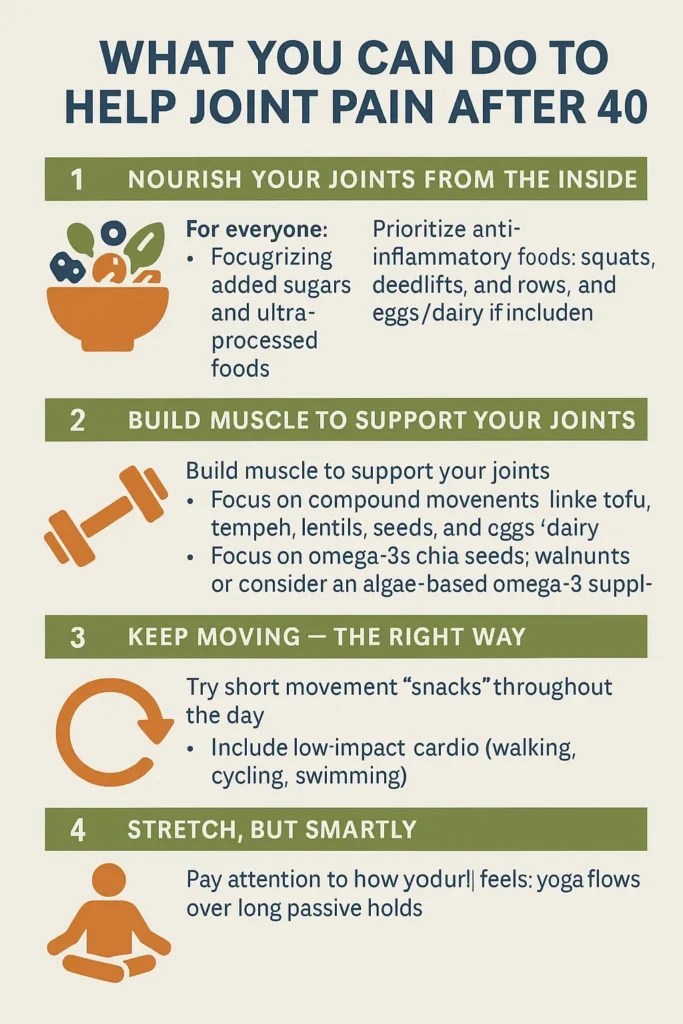
Joint health isn’t just about what you stop doing — it’s about building the right habits. Whether you’re an omnivore or a vegetarian, here’s what works:
🥗 1. Nourish Your Joints From the Inside
What you eat can either fuel inflammation or help fight it.
For everyone:
- Prioritize anti-inflammatory foods: berries, leafy greens, nuts, seeds, olive oil
- Limit added sugars and ultra-processed foods
- Stay hydrated — even mild dehydration affects joint lubrication
For vegetarians:
- Ensure you’re getting enough protein from legumes, tofu, tempeh, lentils, seeds, and eggs/dairy if included
- Focus on omega-3s: chia seeds, flaxseeds, walnuts, and consider an algae-based omega-3 supplement
💡 Pro Tip: Vitamin D, calcium, and magnesium support bone health, which indirectly supports your joints — consider having your levels tested, especially if you live in low-sunlight areas.
💪 2. Build Muscle to Support Your Joints
Strength training is your joint’s best friend.
- Focus on compound movements like squats, deadlifts, and rows — done with good form
- Start light and build gradually
- Resistance bands, bodyweight, or light weights work fine — it’s the consistency that counts
🌀 3. Keep Moving — the Right Way
Movement helps circulate synovial fluid (your joints’ natural lubricant).
- Try short movement “snacks” throughout the day
- Include low-impact cardio (walking, cycling, swimming)
- Add mobility drills that improve control and range of motion
🧘♂️ 4. Stretch, But Smartly
Stretching can help — but it’s not a cure-all.
Pay attention to how your body feels — stretching should never cause pain
Prioritize dynamic stretches or yoga flows over long passive holds
4. Noisy Joints? Here’s What’s Normal (and What’s Not)
You bend down and hear a snap, crackle, or pop — sound familiar?
Good news: most joint noises are completely normal.
What’s not a concern:
• Noises without pain or swelling
• “Cracks” during movement that go away after warming up
• Joints that feel a bit stiff in the morning but improve with movement
What is a red flag:
• Persistent pain or swelling
• Joints that “lock” or “give way”
• Sharp pain during or after movement
💡 If you’re unsure, get it checked — but most midlife joint noise is just part of how your body moves now, not a sign of damage.
5: The Bottom Line — Your Joints Are OK
Joint aches and stiffness after 40 are common, but they’re not inevitable — and they don’t mean you’re falling apart.
You can support your joints by:
- Moving regularly and intentionally
- Strengthening the muscles around your joints
- Reducing inflammatory load — both from diet and stress
- Resting and recovering wisely
Whether you’re a runner, yogi, walker, lifter, or just trying to stay active for life, your joints deserve care — not fear.
Getting older doesn’t break your joints. But ignoring them might.
Start small, move smart, and treat your body like it’s going to carry you another 40+ years.
Conclusion: Small Steps, Stronger Joints After 40
Your joints aren’t doomed to decline just because you’re getting older.
Whether you’re already noticing stiffness or just want to stay active and pain-free for decades to come, the key is daily care, not drastic changes.
✅ Choose anti-inflammatory foods.
✅ Build strength slowly and consistently.
✅ Move often and smartly.
✅ Stay hydrated, and check in with your body.
Even small changes — like a daily walk, or swapping soda for water — add up over time.
This isn’t about being perfect. It’s about staying functional, mobile, and independent.
Because joint health isn’t just a fitness goal — it’s your freedom.